The man entrusted with preserving the marque’s legacy reflects on the C 111 ahead of its historic auction debut at the Palais du Louvre in Paris on 3 February 2027.
I have a confession to make: I belong to the millions who fell hopelessly in love with the Mercedes-Benz C 111 in the early 1970s. Born and bred in Stuttgart, with a passion for cars practically in my DNA, I knew this was the car to have. At least as a scale model. The real thing, of course, was out of reach. Not simply because it was too expensive, but because no amount of money could buy one at all.
Today, I have the extraordinary privilege of getting behind the wheel of cars from the Mercedes-Benz collection—including the very machines I once dreamed of as a boy. The C 111 is actually one of them. In 2022, we presented the C 111-II with the 200-horsepower 3.5-liter V-8 at Pebble Beach and took it for a drive through the streets of Los Angeles. The reactions were remarkable. More than once, we were asked when this spectacular new Mercedes-Benz would be introduced to the market. Just imagine that: a car conceived more than half a century ago, still looking so boldly futuristic that people mistake it for a brand-new creation.
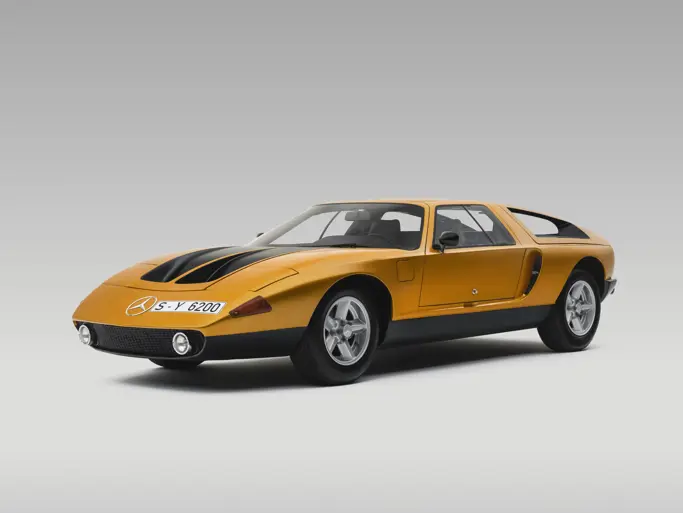
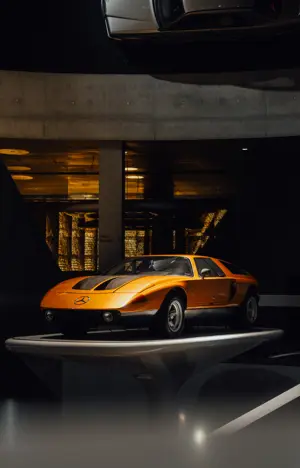
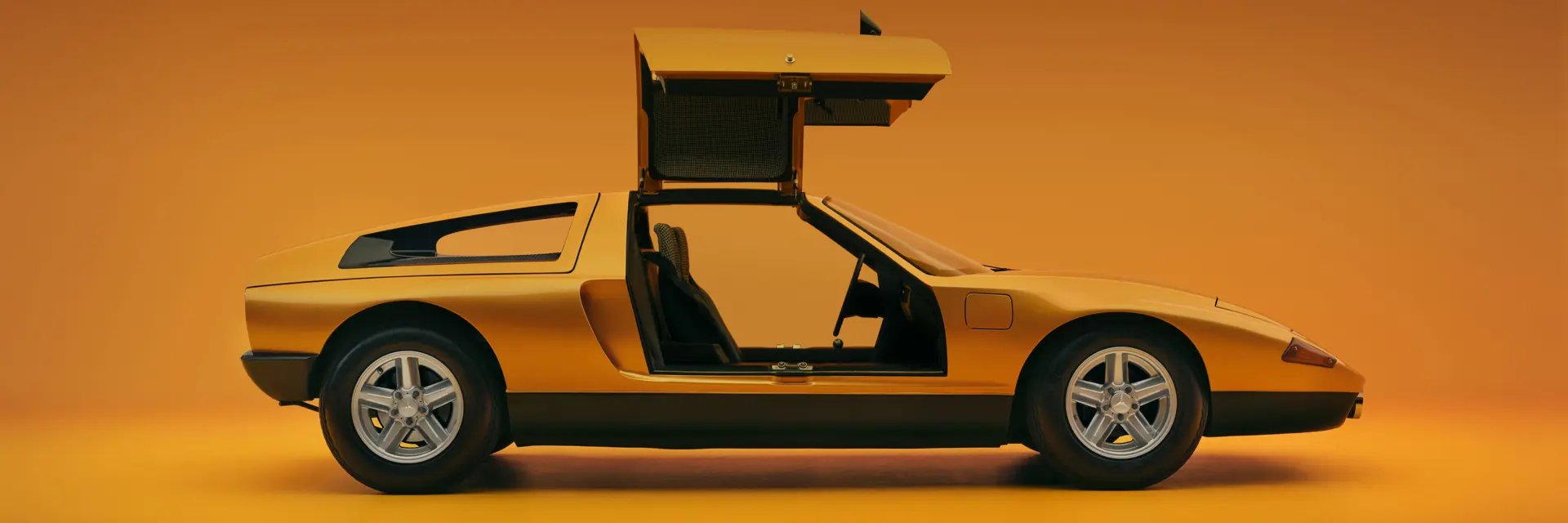
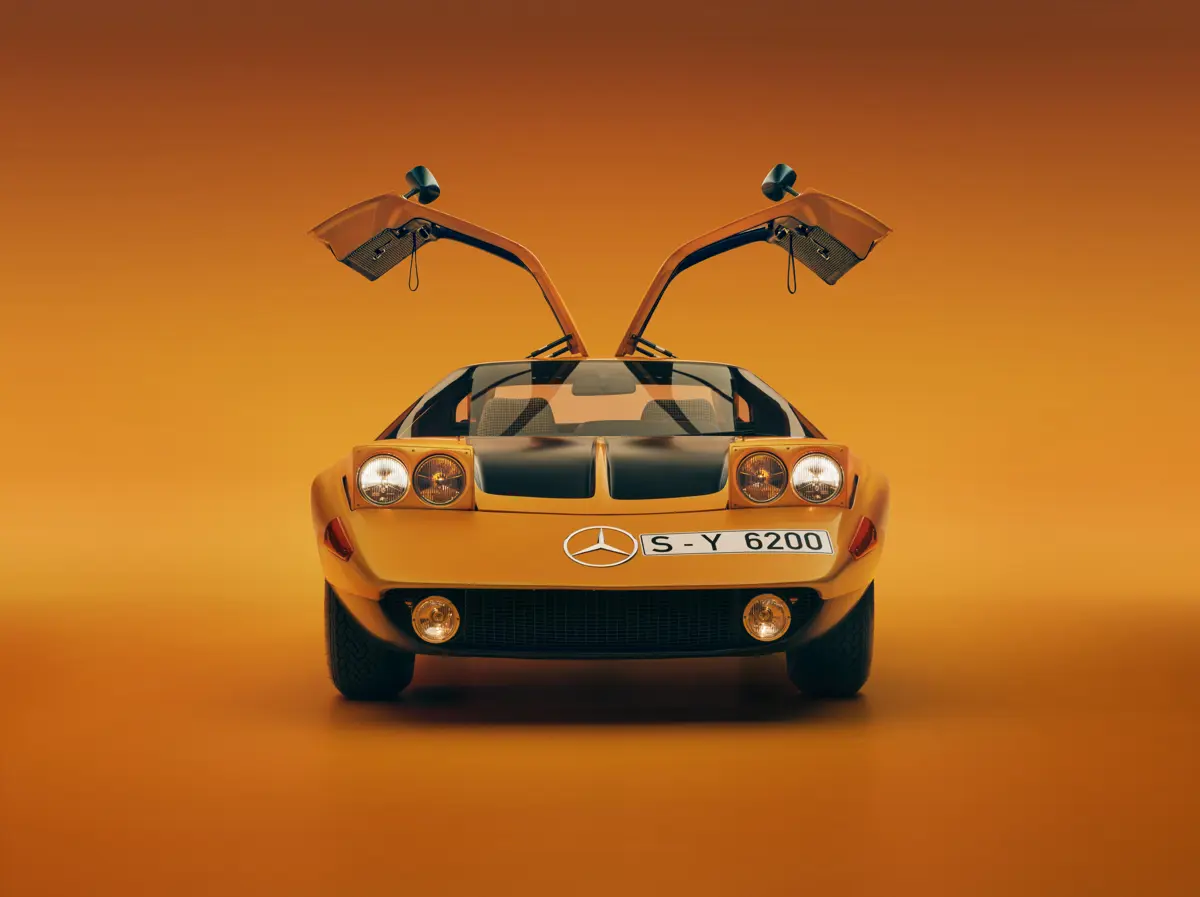
When Mercedes-Benz unveiled the C 111 at the Frankfurt Motor Show in 1969, it was unlike anything the world had seen from Stuttgart before. Its spectacular wedge-shaped silhouette, dramatic gullwing doors, and unmistakable orange paintwork—officially called “Weißherbst”—seemed to belong to another universe.
For a young car enthusiast, it was irresistible. I remember the fascination it inspired, and I am convinced that the C 111 played a significant part in my decision to dedicate my professional life to Mercedes-Benz. It was certainly not the only Mercedes-Benz that fueled that ambition, but it was among the most influential. What made the C 111 extraordinary, however, went far beyond its appearance.
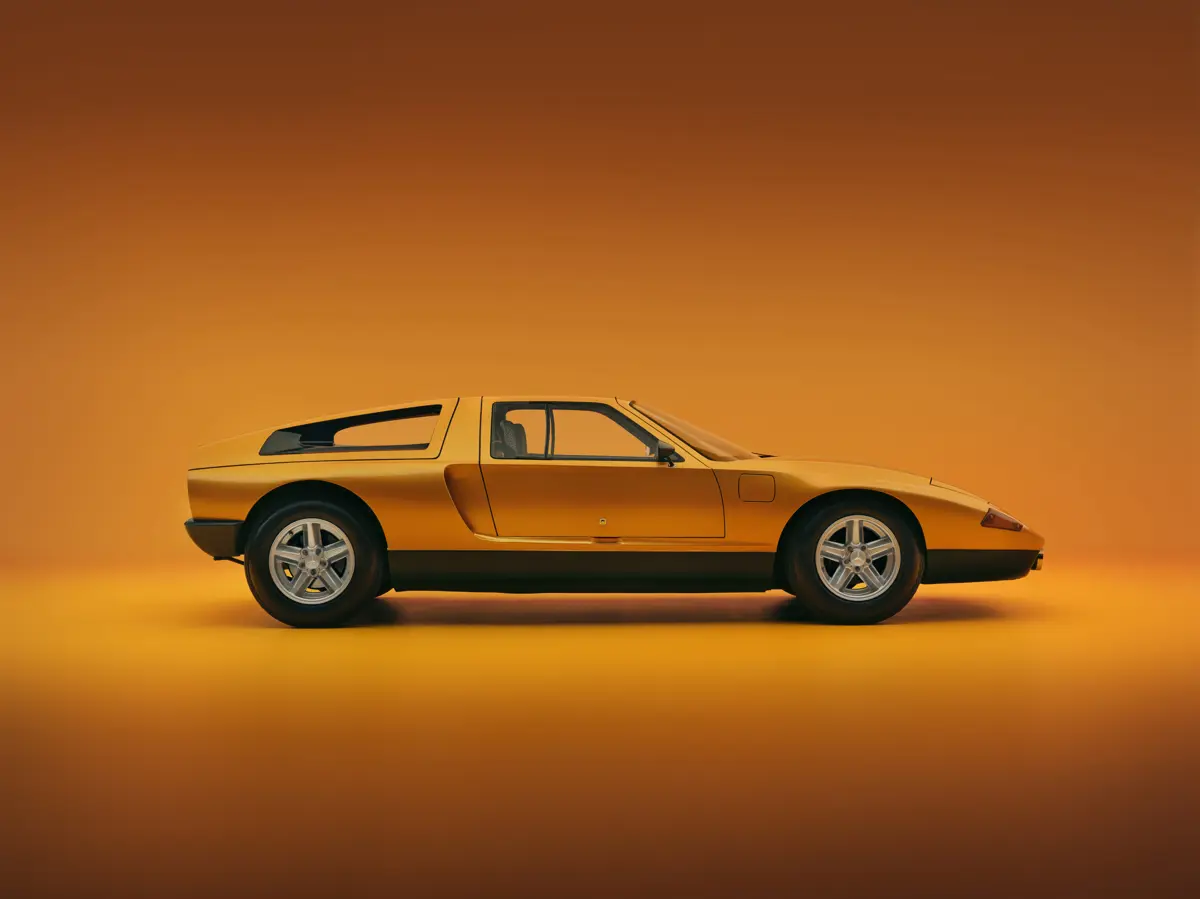
Beneath that futuristic bodywork lay ambitious engineering. The first generation, from 1969, featured a three-rotor Wankel engine. The substantially revised C 111-II employed an even more powerful and refined four-rotor unit: 350 horsepower and a top speed of around 300 km/h. Of all the engines fitted to the C 111-II, the four-rotor Wankel was the most powerful by far. With this dream car, Mercedes-Benz was exploring new possibilities in propulsion, materials, aerodynamics, and vehicle architecture.
Customers were captivated. Some reportedly sent blank checks to Stuttgart, hoping to secure an example. Yet Mercedes-Benz resisted the temptation to turn this sensation into a production supercar. The C 111 had a different mission: to push technological boundaries, challenge conventions, and generate knowledge.
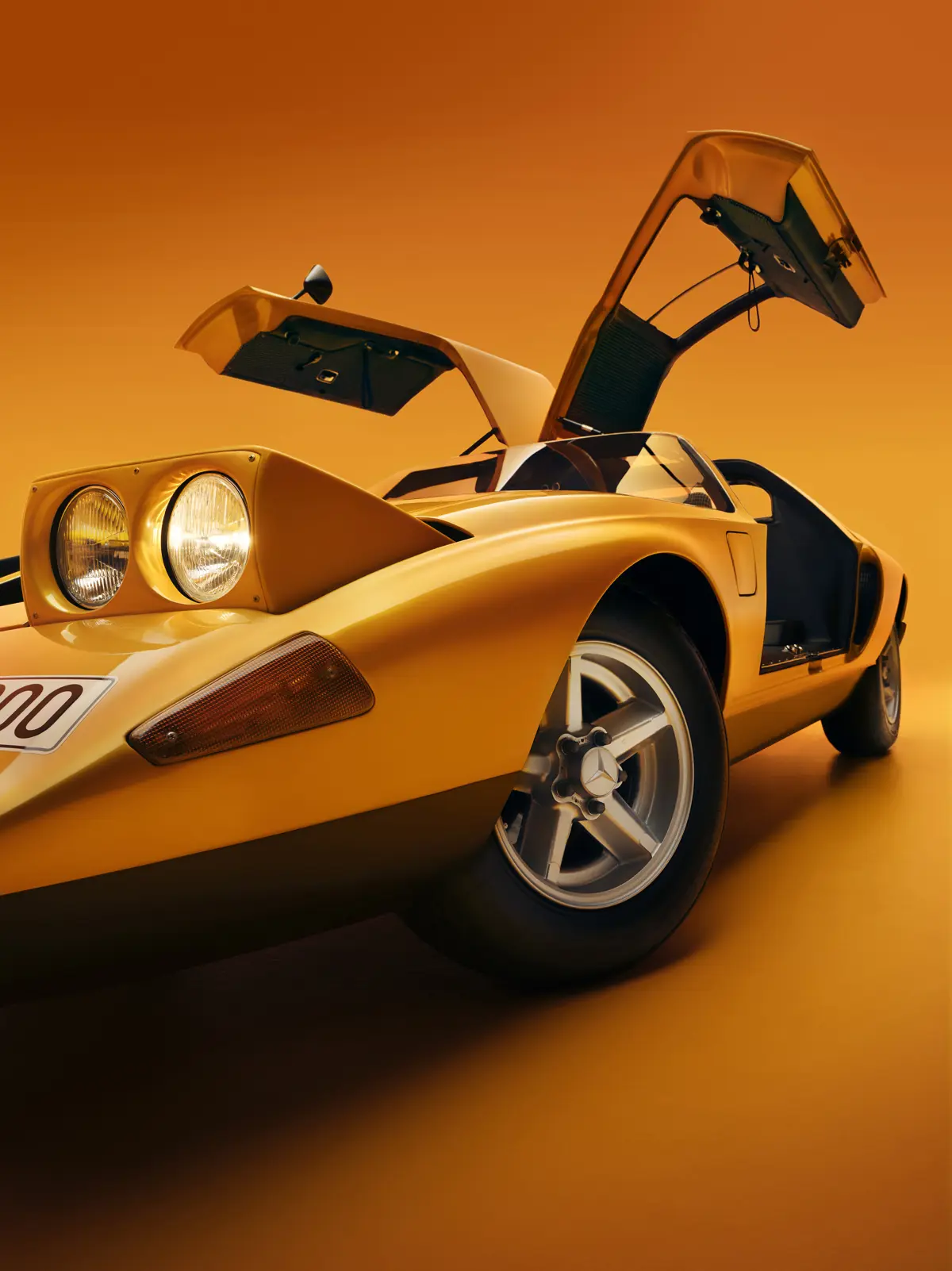
That mission continued spectacularly after the Wankel-powered cars of 1969 and 1970. During the second half of the 1970s, successive C 111 record-breaking cars established numerous international speed records at Nardò in southern Italy. First came the remarkable achievements of turbocharged diesel engines, followed in 1979 by the C 111-IV, which reached an astonishing speed of 403.978 km/h.
For collectors, I believe there is something particularly fascinating about this unique story. They often define the desirability of a classic automobile through rarity, provenance, originality, and historical significance. The C 111 possesses all these qualities in abundance. And although—or rather, precisely because—none have ever been sold, it belongs in the same conversation as the world’s greatest automotive treasures.
To me, this is the true measure of an automotive icon. It transcends its own era. It speaks to people who never experienced its introduction just as vividly as it spoke to those of us who dreamed about it as children.
That a 1970 C 111-II—powered by the legendary four-rotor Wankel engine—is now coming to auction will add to the fascination. It is the first and only of our Weißherbst-colored, wedge-shaped super sports cars to be released into private hands. Some dreams are simply too important to fade. They never stop inspiring.