Artist’s impressions, London to Brighton veterans, and the odd bus: eight vehicles that wouldn’t look out of place in London’s most eccentric corners.
The London Auction returns to The Peninsula later this month, as part of London Motor Week and its curious annual collision of old cars, grand hotels, and eccentric British tradition.
The week culminates with the London to Brighton Veteran Car Run, the world’s oldest motoring event. Nearly 400 pre-1905 cars make the journey from London to Brighton, in all their glory and mechanical cacophony. Which, when you think about it, is really quite weird—and somehow rather fitting for London—a city steeped in history, class, and culture, but with a longstanding appreciation for the idiosyncratic.
These eight vehicles take that maverick attitude and run with it.
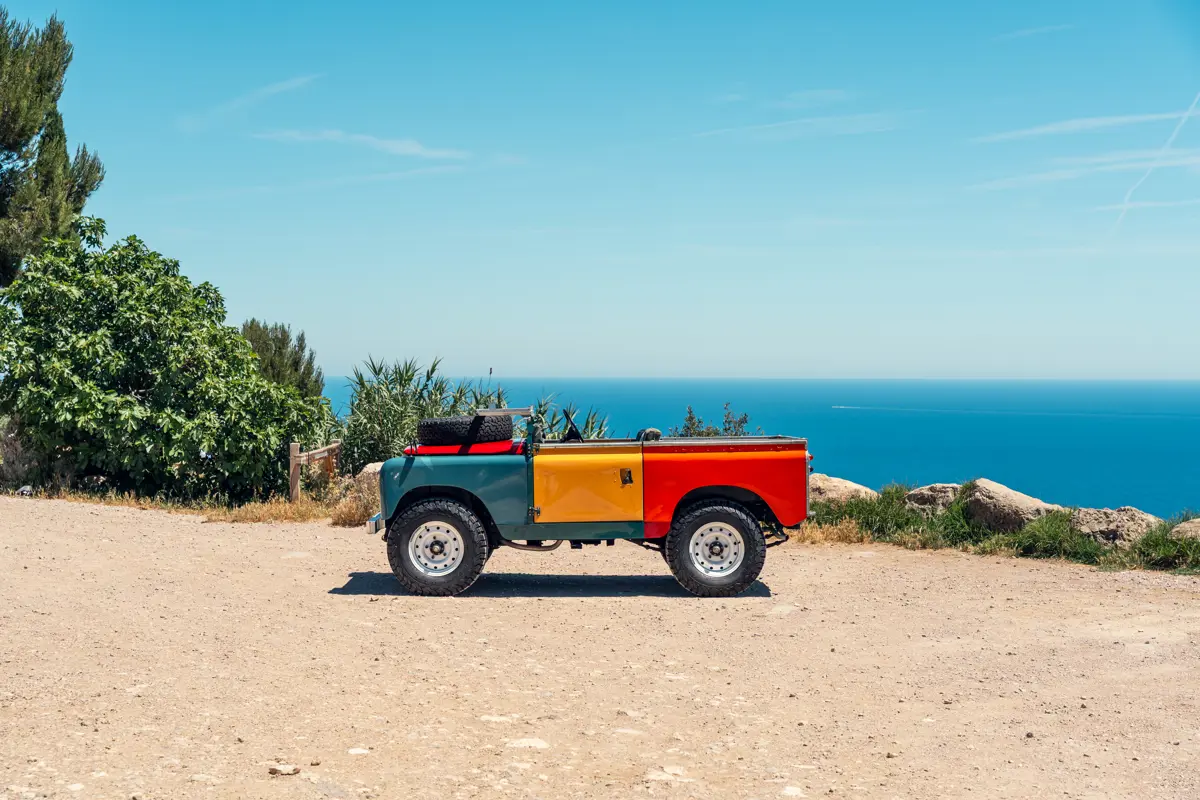
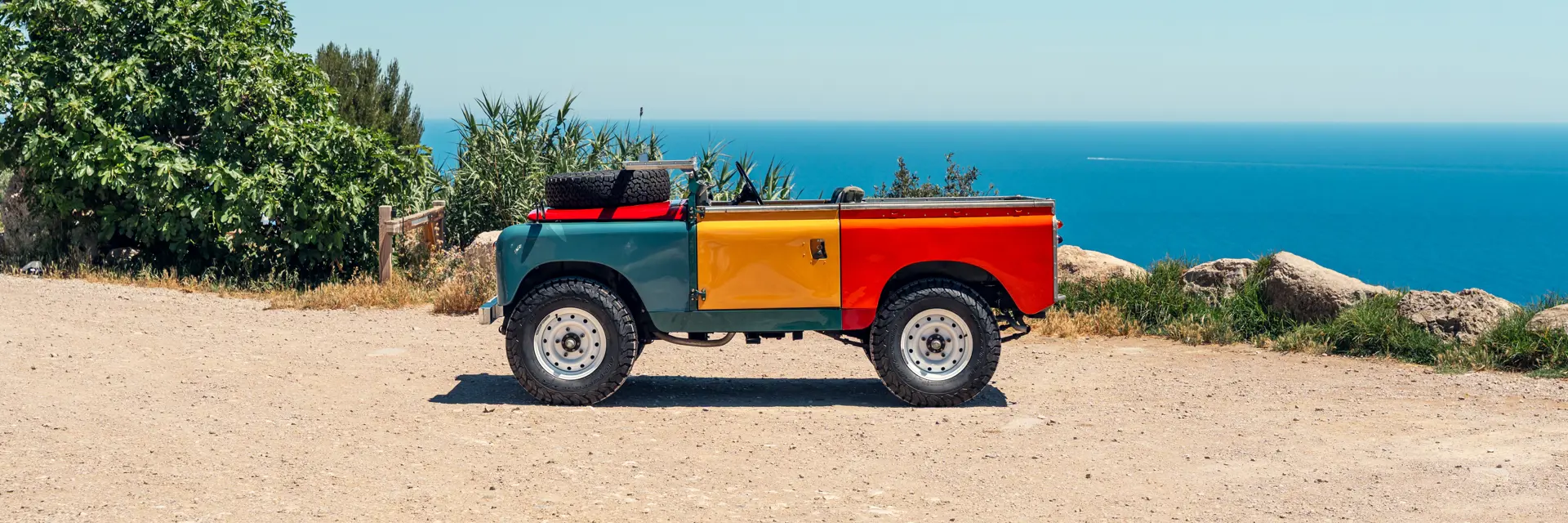
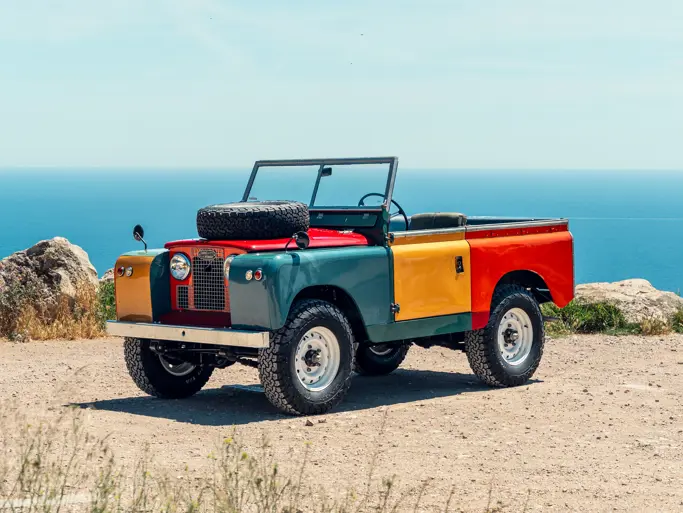
1959 Land Rover Series II 'Art Car' by Sean Wotherspoon
BMW, Hockney, and Warhol might be the names that spring to mind when you think of an art car. But the idea stretches back much further—to the 1920s, when artist Sonia Delaunay-Terk painted abstract geometric shapes onto a Unic Type L2.
Today, artists continue to extend their oeuvre beyond the easel, applying it to increasingly unusual motoring canvases. This left-hand-drive Land Rover Series II is one such example. The 88-inch short-wheelbase car is the work of noted apparel designer Sean Wotherspoon.
The one-of-a-kind Landie is finished in Wotherspoon’s signature kaleidoscopic style, with a plaid patchwork interior. It is fitted with Wolf wheels and BFGoodrich All-Terrain tyres, along with a modern stereo head unit with Apple CarPlay integration. The car was displayed at Monterey Car Week in 2025.
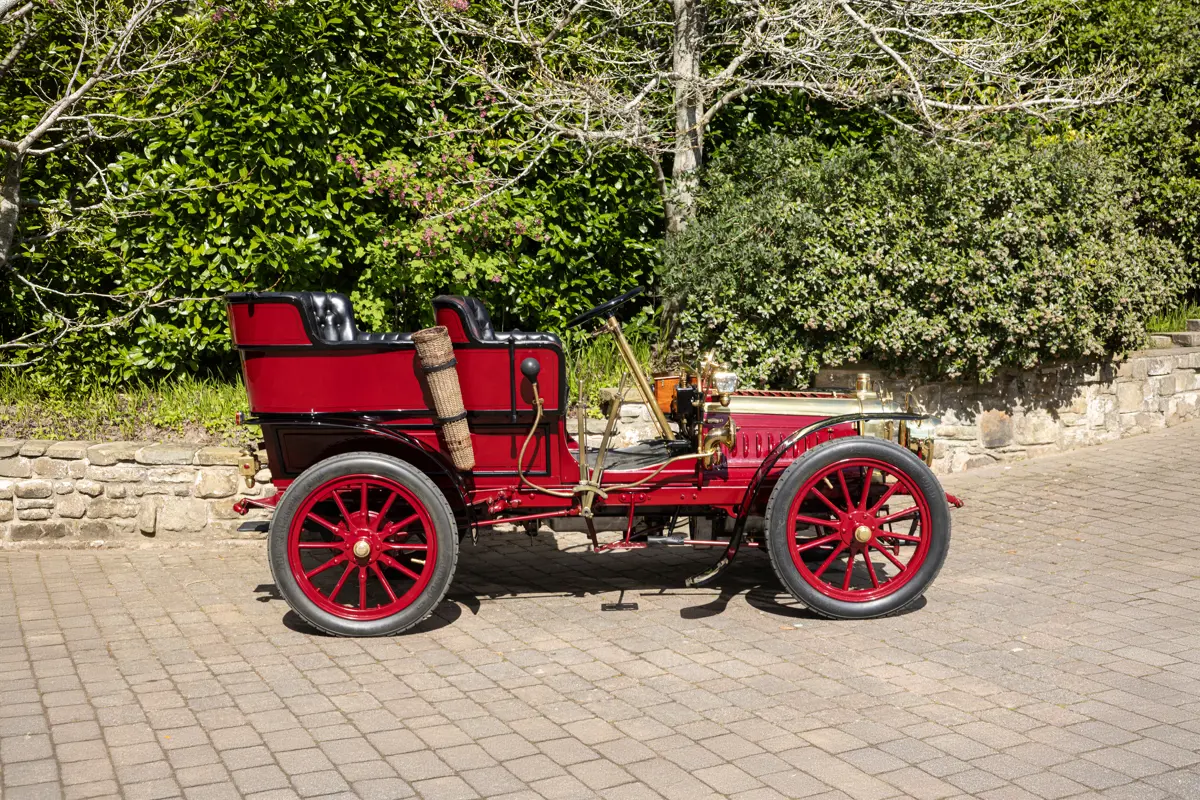
1903 Clément AC4R 12/16 HP Rear-Entrance Tonneau
Not exactly au fait with your French car manufacturers of the 1890s? Then you might not have heard of Clément. One of the great entrepreneurs of the early French automobile industry, Adolphe Clément found his initial success racing bicycles before moving into their sale and manufacture in 1895. The following year, his firm merged with that of fellow pioneer Alexandre Darracq and, in 1897, introduced its first motor vehicle, then known as the Clément-Panhard.
By 1901, the firm was producing a four-cylinder model, the AC4R we have here, which was further modernised the following year with overhead intake valves and around 16 horsepower. The result was one of the most powerful and sophisticated motor cars of the Veteran era, with a reputation for superb engineering.
This particular example has been exhibited at Pebble Beach and has completed the London to Brighton Veteran Car Run several times.
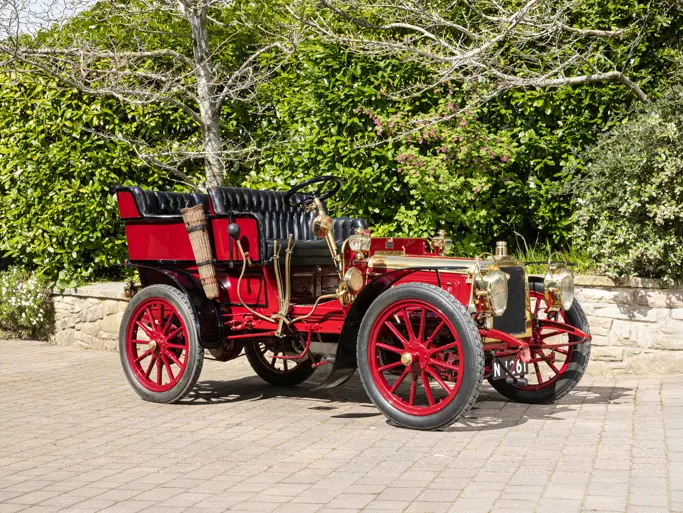
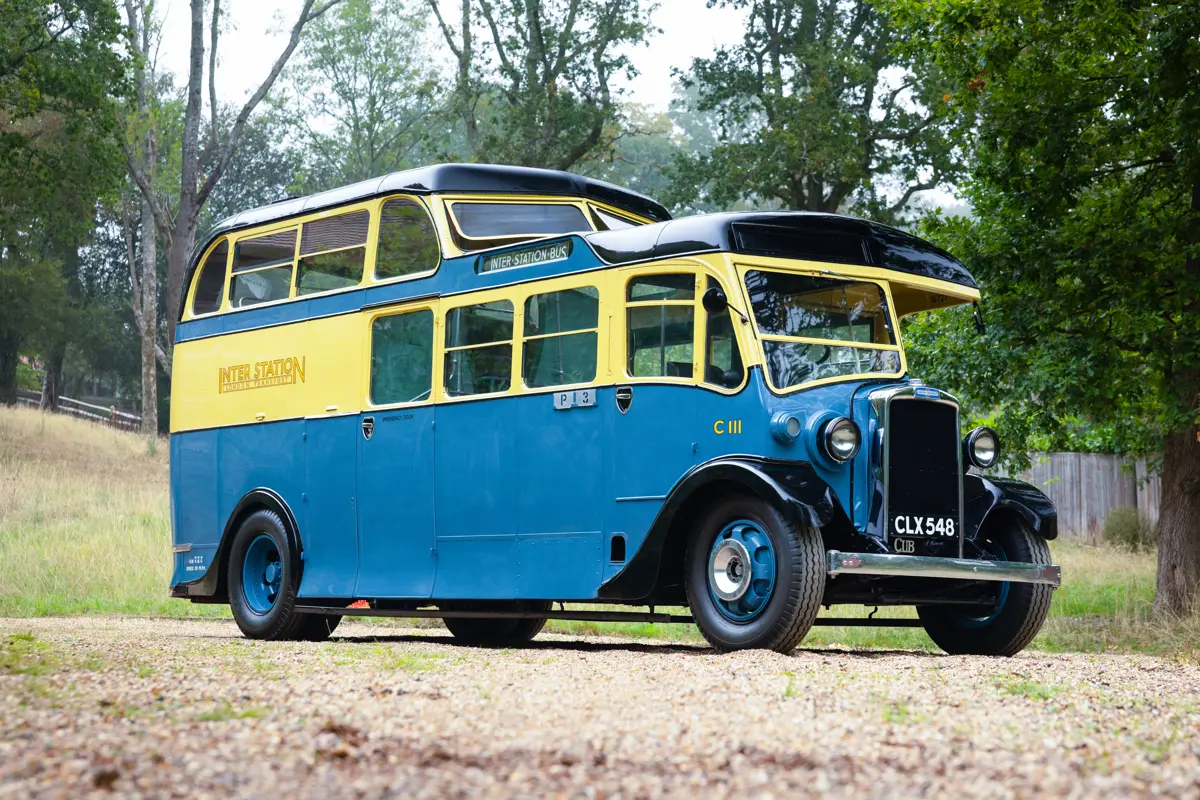
1936 Leyland Cub London Transport Interstation Bus
A homecoming for a London icon that enjoyed a rather glamorous wartime career.
This ultra-rare, one-and-a-half-deck vintage bus was originally built to carry railway passengers between London’s major termini during the night. It was one of eight petrol-engined Cubs built in 1936 for a night service connecting Waterloo, Victoria, Paddington, Euston, St Pancras, and King’s Cross, with 18 seats and a raised rear seating area above a large luggage compartment.
During World War II it spent time with ENSA, the Entertainments National Service Association, transporting performers and their musical instruments as they travelled to entertain members of the armed forces. After the war, it returned to the inter-station service, where it remained until the AEC Regent double-deckers replaced the Cubs in 1950.
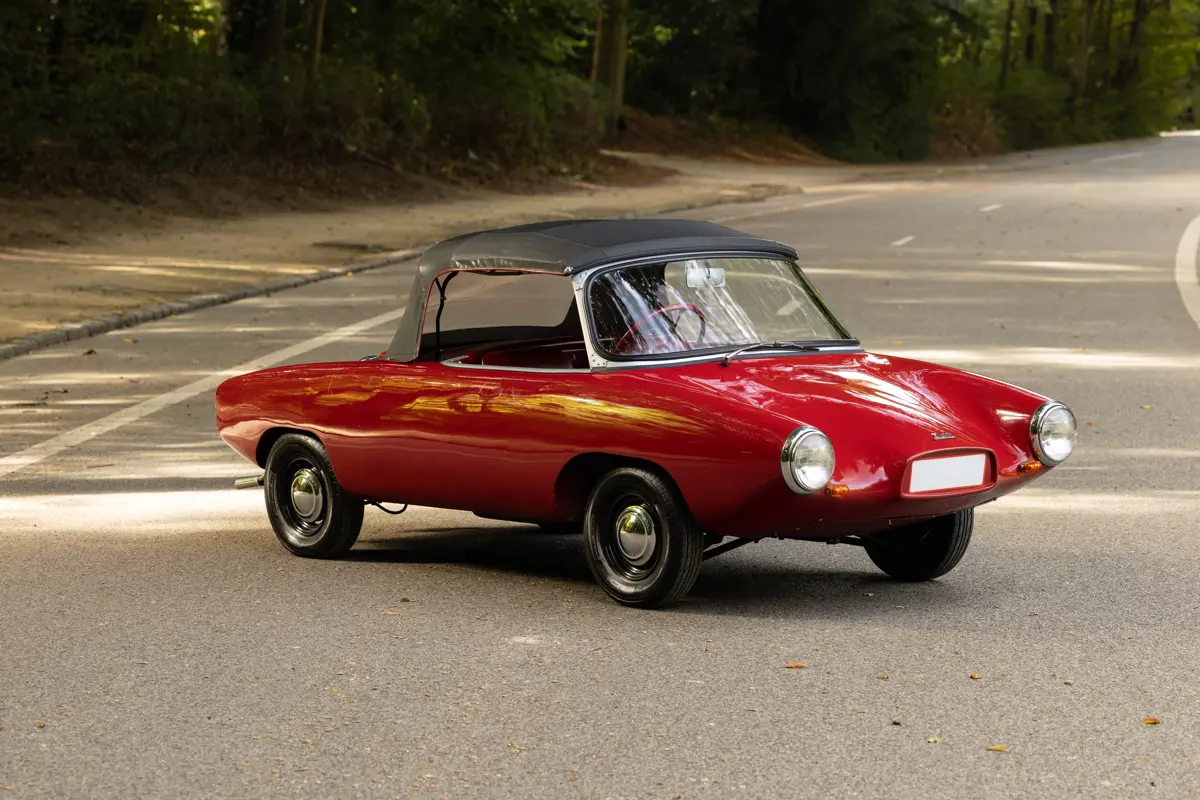
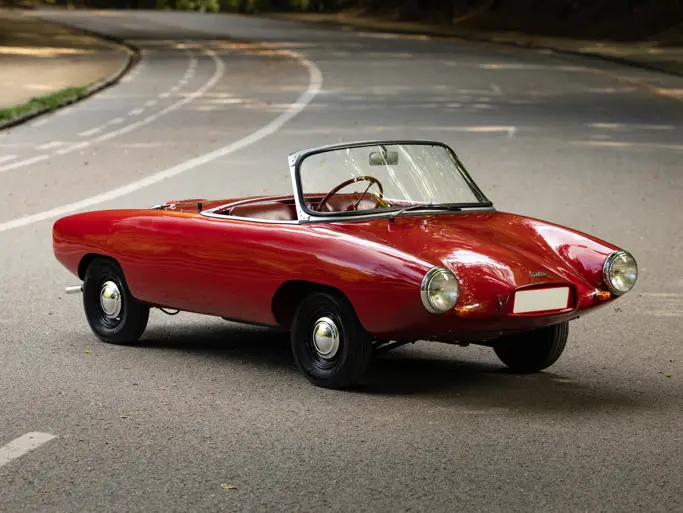
1964 Lightburn Zeta Sports
A pint-sized microcar from Australia, manufactured by a company whose main stock in trade was cement mixers and washing machines. Lightburn attempted to diversify from industrial design and manufacturing with this—the Zeta. These tiny cars were offered in saloon and pick-up body styles, or the more rakish Sports roadster you see here.
Just 363 Zetas were produced in total, only 28 of which were Sports models. Powered by an 18.5-horsepower, 498cc two-cylinder engine, they were all built in 1961 but, somewhat strangely, weren’t sold until three years later.
This delightful red example, complete with a black folding roof, was first registered in September 1964 before joining the collection of the Bruce Weiner Microcar Museum in Georgia, United States.
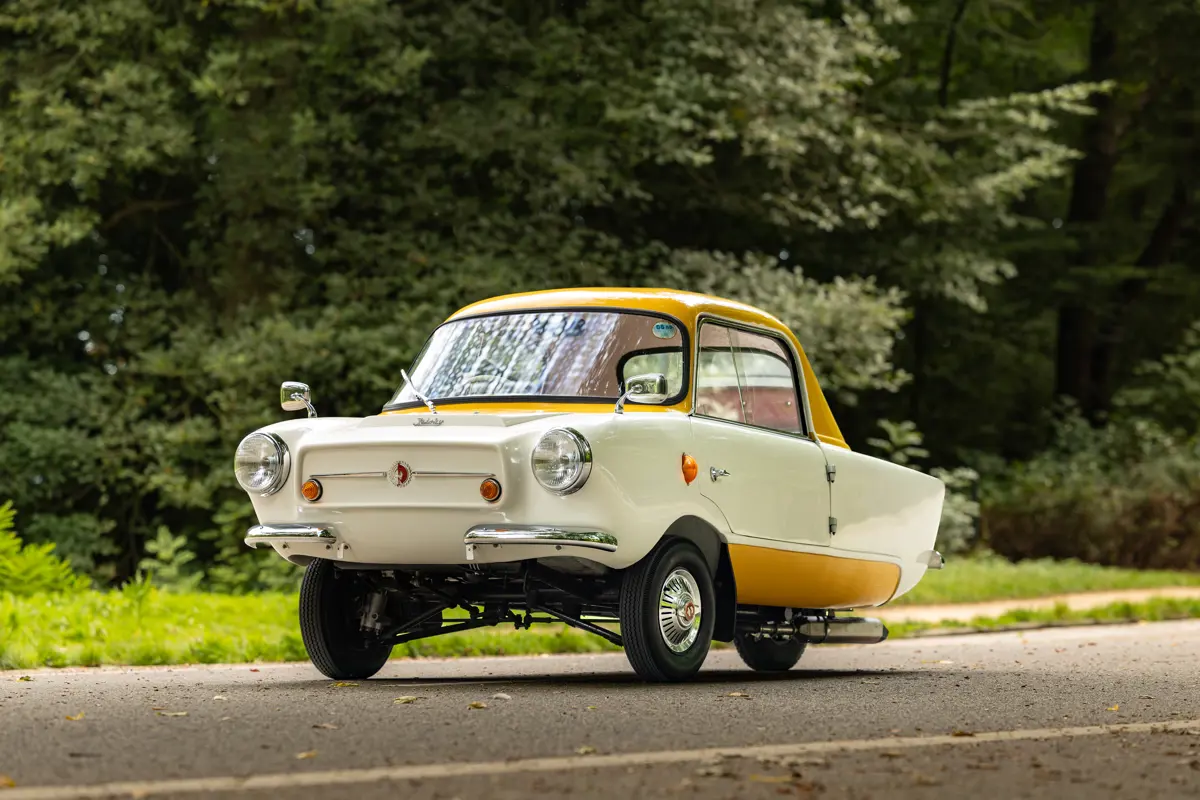
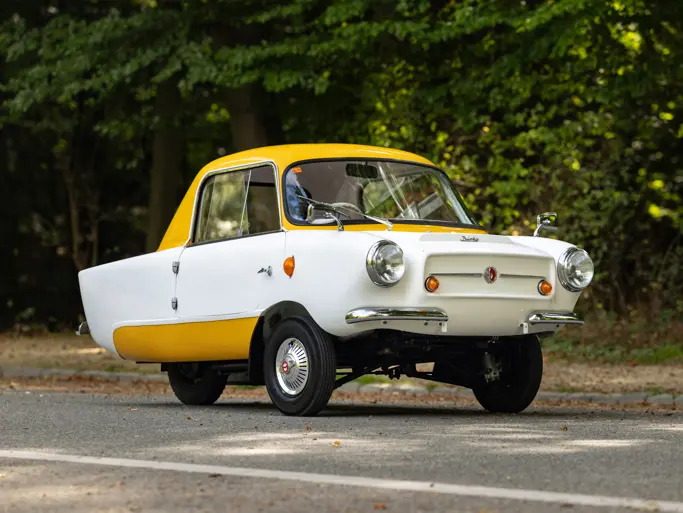
1959 Frisky Family Three
Rear-engined, rear-wheel drive, and designed by Michelotti: you might think we’re writing about an Alpine A110. Instead, this is the considerably smaller—and much stranger—Frisky Family Three.
Only around 1,500 of these three-wheeled microcars were ever built, it is powered by a 197cc two-stroke Villiers 9E engine producing around nine horsepower and mated to a four-speed gearbox.
It is thought that as few as 75 examples survive today. This particular car was first registered on 15 September 1959 before, like the Lightburn above, eventually making its way to the United States to join the Bruce Weiner Microcar Museum. It has been with its current owner for 13 years.
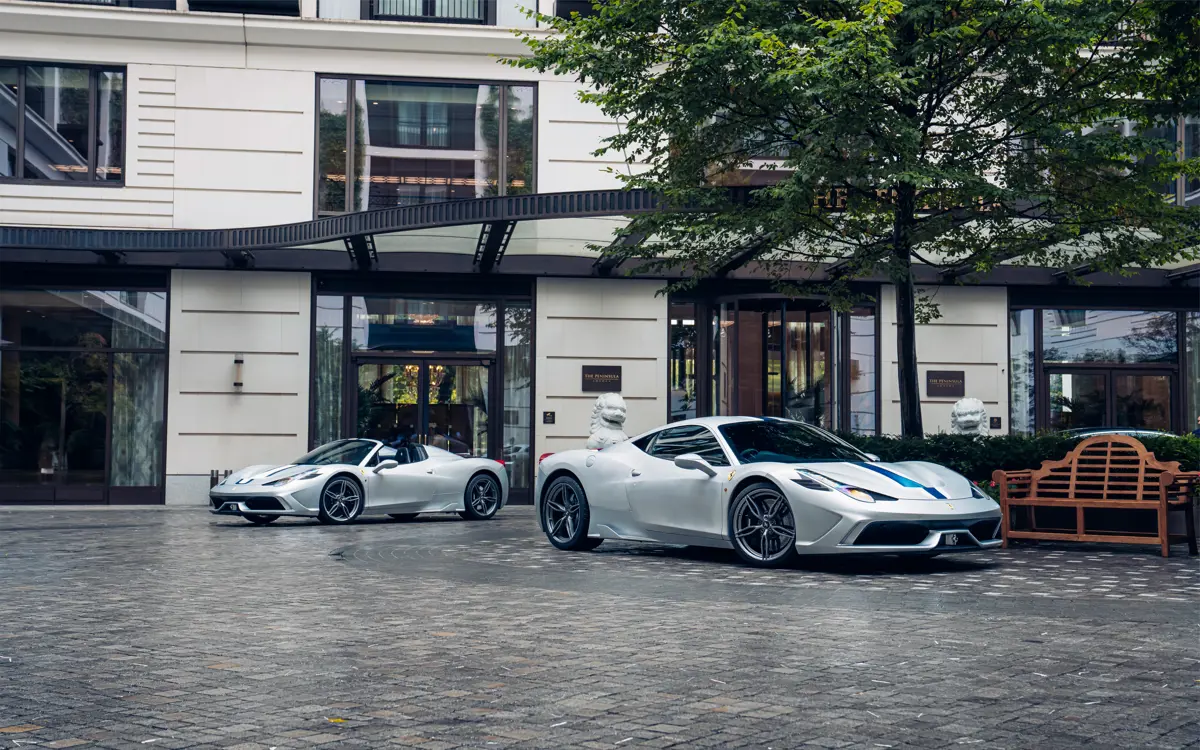
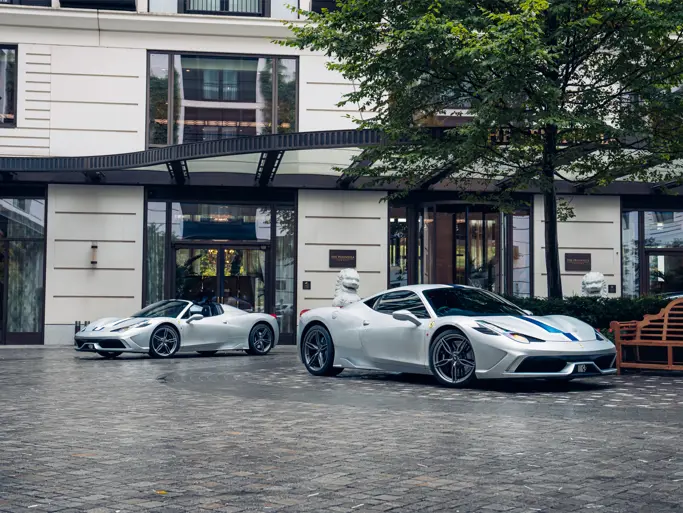
2015 Ferrari 458 Speciale Aperta and 2015 Ferrari 458 Speciale
Ferrari calls it a colour, but Alluminio Grezzo Spazzolato is, more accurately, a finish: brushed raw aluminium. And these two cars were the first Ferraris to ever receive it.
It is an official Ferrari colour, complete with its own colour code, but there is no paint involved on the majority of the bodywork. Available only through Ferrari’s Tailor Made programme, the brushed aluminium doesn’t extend to the bumpers, which are composite and therefore painted.
The most intriguing part of this pair? Both were ordered new by the same customer and have sequential chassis numbers.
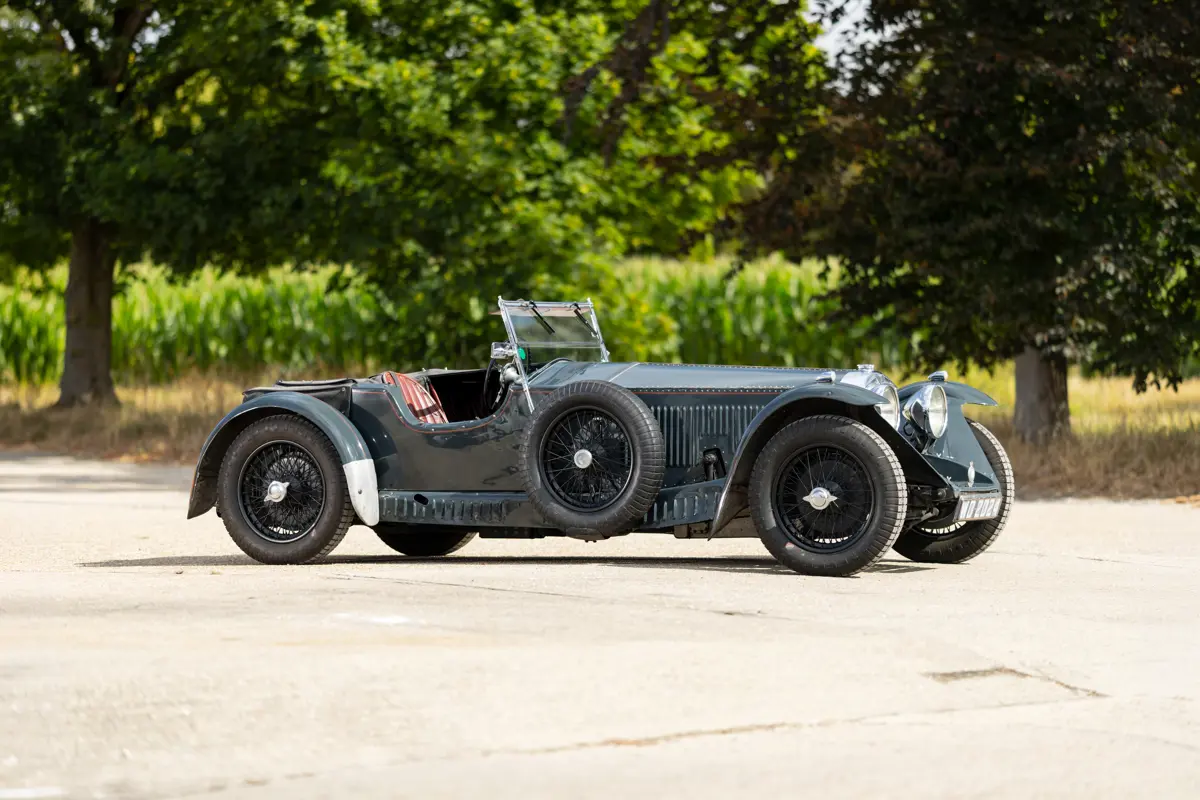
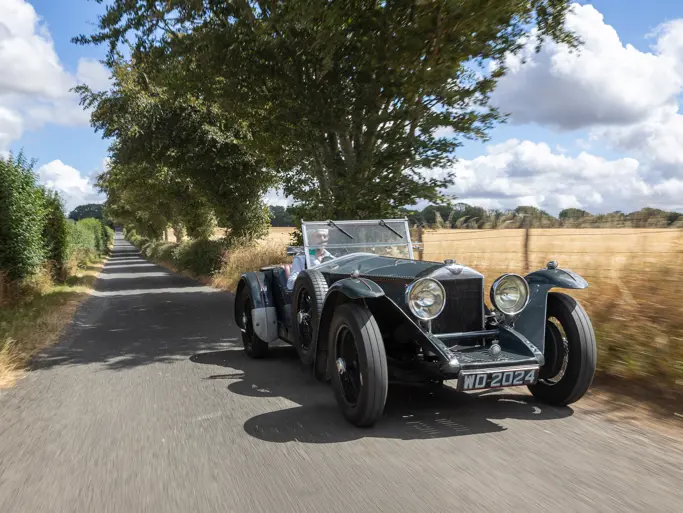
1931 Invicta 4½-Litre S-Type ‘Low Chassis’ Sports by Vanden Plas
Without the fortune amassed by the family behind Tate & Lyle and its ubiquitous Golden Syrup, this extraordinary Monte Carlo Rally winner might never have existed.
Invicta was founded in 1924 by engineer Noel Macklin and businessman Oliver Lyle, whose family had made its fortune in the sugar trade. Macklin had an ambitious idea: to create a car with the effortless flexibility of a steam engine, but powered by a conventional internal-combustion engine.
The most famous result of this now largely forgotten company was the S-Type. The low-chassis variant, like the one we have here, is widely regarded as one of the finest-looking British sports cars of the pre-war era. And it was no mere exercise in style. In 1931, Donald Healey drove an S-Type to victory in the Monte Carlo Rally, cementing its place among Britain’s great pre-war sports cars.
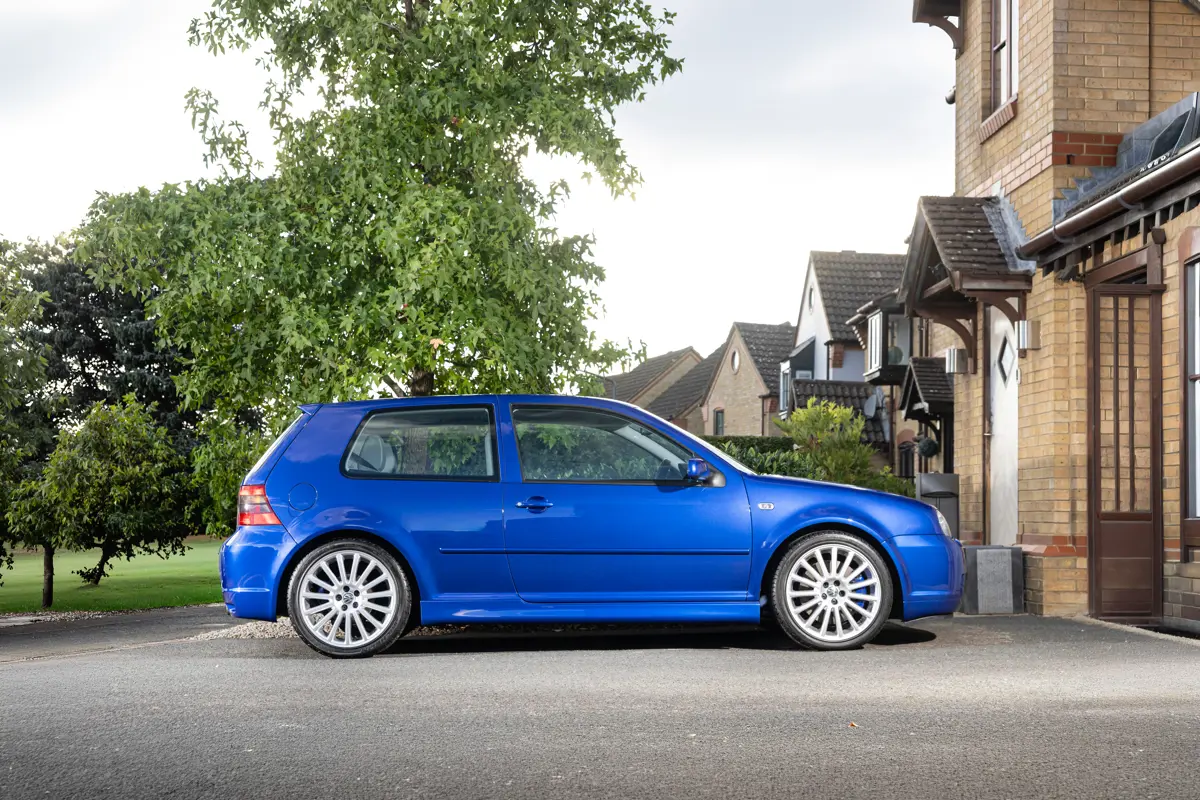
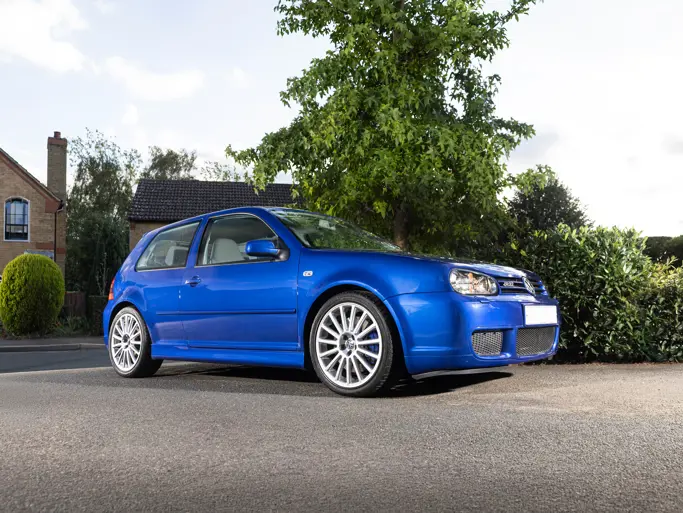
2003 Volkswagen Golf R32
“Like new” is a phrase oft found in car adverts, but rarely is it as apt as it is for this Volkswagen Golf R32.
Powered by a 3.2-litre VR6 producing 237bhp, paired with a six-speed manual gearbox and Haldex four-wheel drive, this special edition was one of just 2,000 delivered to the UK.
First registered on 4 October 2003, the Volkswagen has remarkably remained with its sole owner, who has driven it for just 390 miles in 23 years. The car has spent much of its life in storage, and its only MoT inspection took place on 3 October 2006, when it passed with just 375 miles on the odometer.